
A cold call script is not a robot reading a paragraph at a stranger. The best scripts are a structure, not a screenplay: a reliable shape for the first sixty seconds that earns you the next five minutes, with room to sound like a human inside it. This guide breaks down that structure, gives you a full example to adapt, shows how to handle the objections you will actually hear, and covers the step most reps skip, logging what you learned.
Why use a script at all
Reps who "wing it" mostly wing the same mistakes: a weak opener, pitching before they have earned attention, talking too much. A script fixes the structure so your judgment is free for the conversation. It also makes you coachable: when every rep runs the same shape, you can see which openers and questions actually work and improve them. The goal is not to sound scripted. It is to never have to think about what comes next, so you can listen.
The anatomy of a cold call
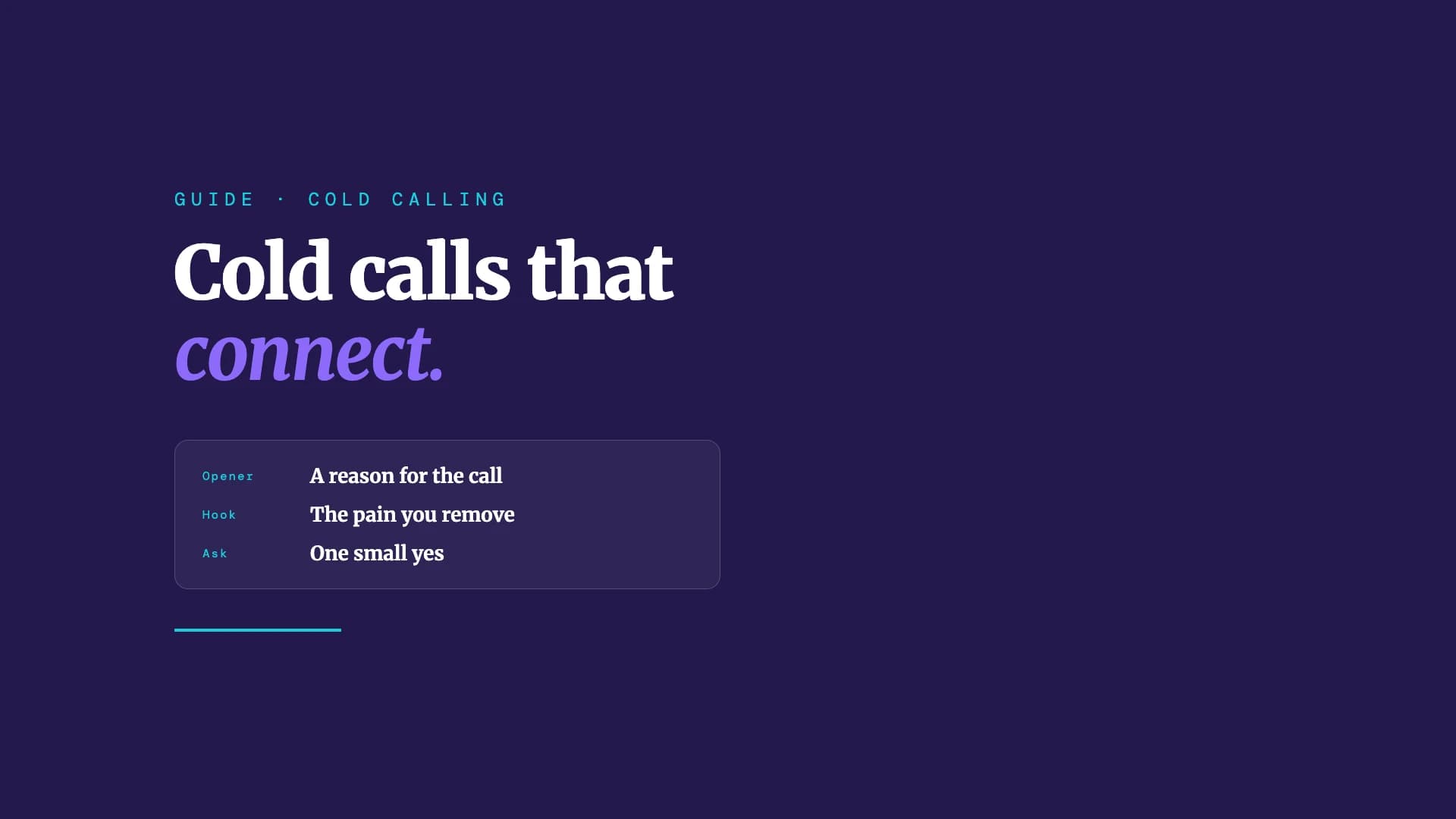
Almost every effective cold call moves through the same five beats:
- OpenerSay who you are and give an honest reason for the call.
"Hi Sam, it is Alex from Neural Summary. I know I am calling out of the blue, can I take 30 seconds to explain why, then you decide?"
- PermissionAsk for the time instead of assuming it. It disarms the reflex to hang up.
"Did I catch you at a bad moment?"
- HookName the specific pain you remove, in their language, not your features.
"Most sales leaders we talk to lose hours rebuilding call notes the CRM never captured."
- DiscoveryAsk one good question and then stop talking.
"How does your team capture what was said on a call today?"
- The askRequest one small yes, not the whole deal.
"Worth a focused 15 minutes next week to see if it fits?"
Two principles hold the whole thing together. Ask for permission early, it respects the person's time and disarms the instinct to hang up. And spend most of the call listening: like the Sandler method, the prospect should be doing most of the talking, with you guiding through questions rather than pitching features.
A full example
Strung together, the beats sound natural, not robotic:
"Hi Sam, it is Alex from Neural Summary. I know I am calling out of the blue, can I take thirty seconds to tell you why, and then you can decide if it is worth continuing? ... Most sales leaders I talk to lose a couple of hours a day to rebuilding call notes the CRM never captured, and deals slip through the cracks because of it. I am curious, how does your team capture what was actually said on a call today? ... That is exactly what I figured. Would it be worth a focused fifteen minutes next week to see whether this fits how you work?"
Notice what it does not do: it does not pitch features, it does not ask for an hour, and it does not pretend the call was expected. It earns a small yes.
Handling the common objections
You will hear the same handful of objections. Handle them with a question, not a counter-pitch:
"I'm busy / not a good time." Believe them and trade: "Totally fair, I will be quick or we can find a better time. Thirty seconds now, or would tomorrow morning suit you?" "Just send me an email." Agree, then qualify: "Happy to. So I send something useful and not generic, what is the main way your team handles call notes today?" "We already use something." Be curious, not combative: "Makes sense, most teams do. What do you wish it did that it doesn't?" "Not interested." Respect it, ask one diagnostic: "Understood, can I ask, is it that the timing is off, or that this is not a problem you have?" The pattern is the same: do not argue, ask a question that keeps you in discovery.
Log the call without breaking flow
Here is the part that quietly decides whether cold calling compounds or not: capturing what you learned. The pain they named, the tool they use, the next step, none of it helps next week if it lives only in your head. But typing notes mid-call kills your attention, and writing them after means details are already gone. Record the call (with consent) and let the notes write themselves.
That record is what turns a pile of calls into a pipeline you can actually work, and into the conversation intelligence that tells you which openers and questions are winning. Just remember to tell the prospect you are recording; our recording-law guide covers when consent is required.
From call to logged in seconds
The reason to capture calls is not bookkeeping; it is that the next call, the handoff, and the forecast all depend on what this one actually surfaced. Neural Summary records or takes an upload of the call and produces the CRM-ready notes, the pain, the next step, the follow-up, so the rep stays present on the call and the record is done the moment it ends. The discipline of the script gets you the information; capturing it cleanly is what lets you act on it.
The bottom line
A cold call script is a structure, not a screenplay: open with a real reason, ask permission, hook on a specific pain, ask one good question, and request one small yes. Handle objections with curiosity instead of counter-pitches, let the prospect do most of the talking, and capture what you learned so the call compounds. The script frees your attention; listening and logging do the rest.
Frequently asked questions
What makes a good cold call script?
A clear structure rather than a word-for-word speech: an honest opener, a request for permission, a hook on a specific pain in the prospect's language, one good discovery question, and a small, concrete ask. It should free you to listen, not force you to recite.
How do you start a cold call?
Say who you are, acknowledge that you are calling unannounced, and ask for a few seconds to explain why, letting them decide whether to continue. Asking permission up front respects their time and disarms the reflex to hang up.
How do you handle "I'm not interested" on a cold call?
Do not argue. Respect it and ask one diagnostic question, for example whether the timing is off or it is simply not a problem they have. That keeps you in discovery and often surfaces the real objection behind the brush-off.
Should cold calls be scripted or improvised?
Scripted in structure, improvised in wording. A fixed shape for the call removes the guesswork and makes reps coachable, while leaving room to sound human and adapt to what the prospect says. The aim is to never sound scripted.
How should you take notes during a cold call?
Avoid typing while you talk, it splits your attention. Record the call with consent and let an AI tool produce the CRM notes (pain, current tooling, next step) afterward, so you stay fully present during the call and still capture everything that mattered.