
Most teams pick a meeting cadence once, by accident, and never revisit it. A weekly sync gets scheduled because that felt right at the time, and a year later half the room is only there out of habit. Cadence is worth more deliberate thought than that, because the right rhythm keeps a team aligned with the fewest interruptions, and the wrong one quietly taxes everyone's week. Here is what cadence means, how to choose it, and how to tell when yours has drifted.
What "meeting cadence" means
Meeting cadence is simply the recurring schedule a meeting runs on: how often it happens, when, and how long. A weekly 30-minute team sync on Monday mornings is a cadence. So is a monthly two-hour strategy review. The word matters because the schedule itself, not just the content, shapes how a team works: too frequent and you fragment people's focus; too rare and problems fester between meetings.
The three common cadences
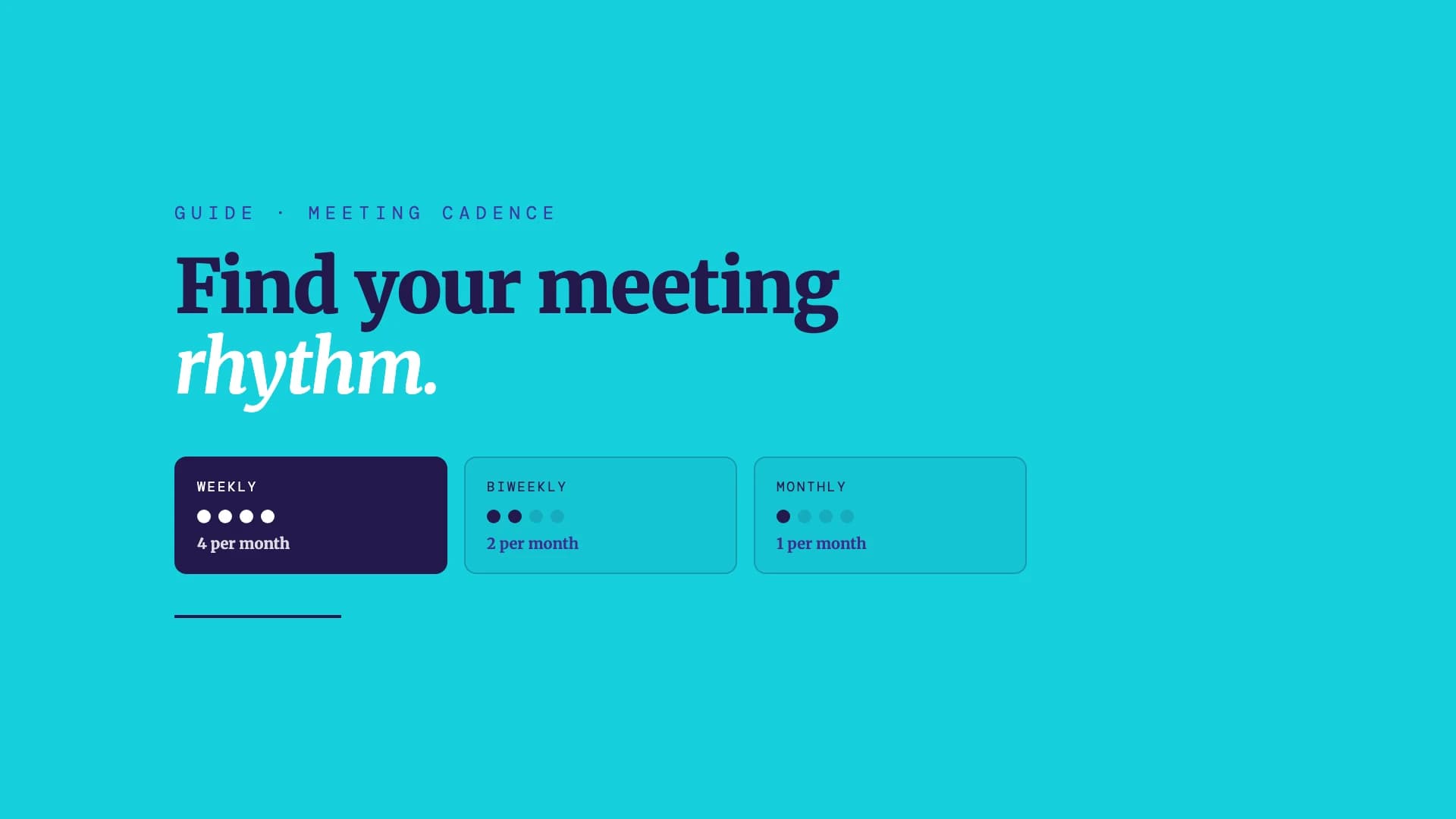
Most recurring meetings settle into one of three rhythms, each suited to a different kind of work:
Weekly
Once a weekActive projects, ongoing coordination, and planning the week ahead. The default for most operational teams.
Biweekly
Every two weeksMore independent work that still needs touchpoints, while protecting uninterrupted deep-work time.
Monthly
Once a monthAutonomous teams, or bigger-picture review over a longer horizon.
These are starting points, not rules. A fast-moving launch team might run a daily standup on top of a weekly planning meeting; an autonomous research team might do fine with a monthly review and little else.
How to choose your cadence
Four questions get you to the right rhythm:
Start from the purpose. Coordination and unblocking need frequency (weekly or more); strategy and review need space (monthly or quarterly). Match it to your work cycles. If you run two-week sprints, a biweekly planning rhythm falls out naturally; if you report monthly numbers, a monthly business review does. Match the interval to the meeting type. Status and coordination want to be frequent and short; deep decisions want to be rarer and longer. And ask the team. The people in the meeting know whether it is too often or not often enough, so ask them rather than guessing.
The goal is the lightest cadence that still keeps everyone aligned. When in doubt, meet less often but protect the meetings you keep.
Signs your cadence has drifted
Cadence is not set-and-forget; the right rhythm six months ago can be wrong now. A few signals that yours needs a look: the meeting regularly has nothing urgent to discuss (too frequent); or, the opposite, people are constantly blocked waiting for it (too rare). Attendance is drifting, or people multitask through it (the meeting is not earning its slot). Or the same status updates get read aloud every time with no decisions made (it should be less frequent, or async). Any of these is a cue to change the interval, shorten the meeting, or replace it with a written update.
Make the cadence earn its place
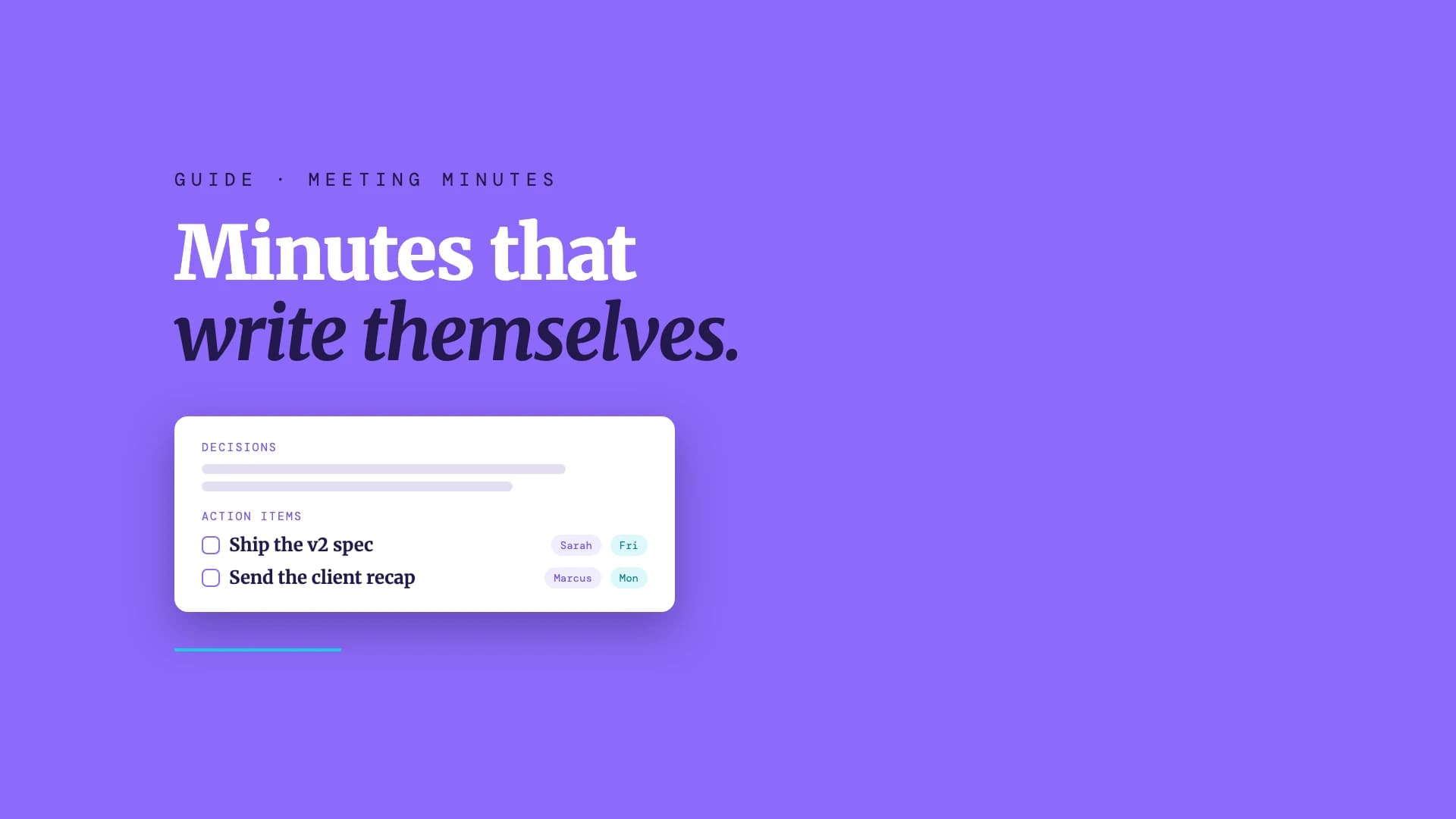
A cadence is only worth keeping if each meeting produces something. The simplest way to hold that bar is to make every recurring meeting end in decisions and owned action items, and to start the next one by reviewing them. When the follow-up is automatic, the meeting visibly moves work forward, and it becomes obvious which meetings deserve their slot and which can be dropped. Capturing that record by hand every time is the friction; a tool like Neural Summary produces the decisions and action items for you, so the cadence stays accountable without extra admin. For the meeting itself, our guide on how to run a staff meeting pairs well with getting the rhythm right.
The bottom line
Meeting cadence is the rhythm your meetings run on, and it deserves a deliberate choice, not an accident. Weekly suits active coordination, biweekly suits more independent work, and monthly suits autonomous teams and longer-horizon review. Choose from the purpose and your work cycles, ask the team, and revisit it: the right cadence is the lightest one that keeps everyone aligned.
Frequently asked questions
What does meeting cadence mean?
Meeting cadence is the recurring schedule a meeting runs on, its frequency, timing, and length. For example, a weekly 30-minute team sync or a monthly two-hour review are both cadences.
How often should a team meet?
It depends on the work. Weekly is the default for teams doing active, coordinated work; biweekly suits more independent teams that still need touchpoints; monthly suits autonomous teams or longer-horizon review. Choose the lightest cadence that still keeps everyone aligned.
What is a good meeting cadence for a small team?
Many small teams do well with one weekly sync for coordination plus individual one-on-ones, and a less frequent (monthly or quarterly) session for bigger-picture planning. Start there and adjust based on whether meetings consistently have something worth deciding.
How do you know if you are meeting too often?
Tell-tale signs: the meeting often has no urgent agenda, people multitask through it, or it is just status updates with no decisions. Any of those means you should meet less often, shorten the meeting, or move the updates to a written channel.
Weekly vs biweekly meetings: which is better?
Weekly is better when work is fast-moving and needs regular coordination or week-ahead planning. Biweekly is better when work is more independent and you want to protect uninterrupted focus time while still keeping a regular touchpoint. Match it to how tightly the team's work is coupled.