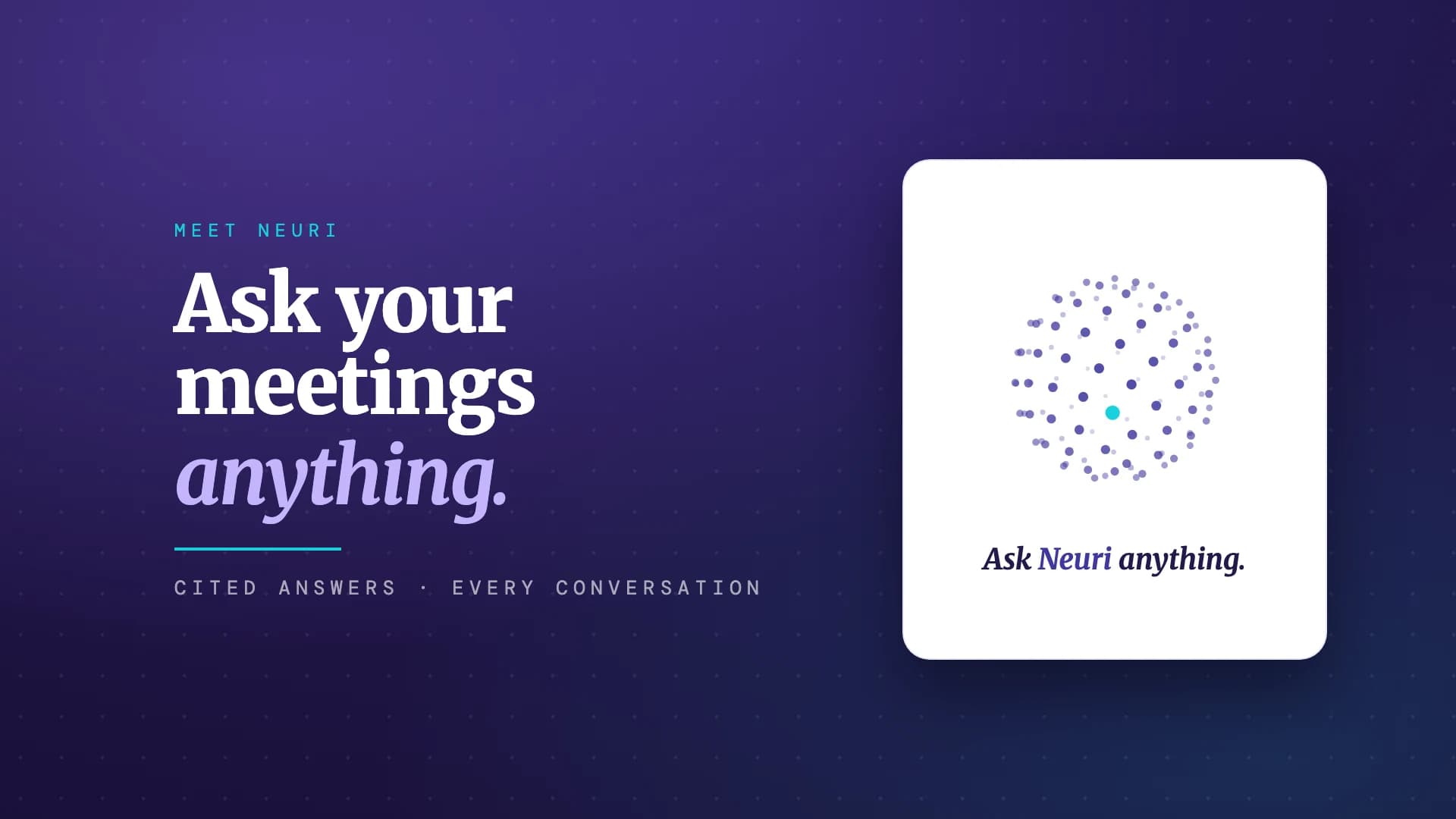
Every conversation you record in Neural Summary can answer questions. The one answering is Neuri: our conversation agent, the dotted sphere you see in the Ask panel on web and in the mobile apps. You were in the meeting, so you remember the gist. Neuri holds the specifics: every number, every commitment, every objection, stamped to the second, attributed to the person who said it.
That is the division of labor. You think; Neuri remembers.
What Neuri is
Neuri lives inside each conversation. Open a recorded meeting, ask a question in plain language, and Neuri answers from that meeting's transcript, citing the exact moments it drew from, like [12:40, Sara], so you can jump to the tape and check. It answers in your language, keeps the thread going across follow-up questions, and suggests the next question worth asking after each answer.
Neuri is not a search box and not a chatbot bolted onto notes. It reads the conversation the way a sharp colleague who was in the room would: it knows the meeting's title and date, who took part, and which of the speakers is you. Ask "what did I commit to?" and it knows who "I" is.
What you can ask
A few real patterns, all one question away:
- >Recall. "What did we agree on the budget?" "What was the final deadline?" "Did we decide on the vendor or postpone it?"
- >Extraction. "List every objection they raised." "Pull out all the numbers that were mentioned." "Which features did the customer ask for?"
- >Accountability. "What did I commit to?" "Who owns the follow-up on pricing?" "What did Sara push back on?"
- >Drafting. "Write the recap email I promised." "Draft my update for the team." "Turn the decisions into a bullet list for the ticket."
- >Judgment. "What did I miss?" "Where were we vague?" "What questions should I have asked?"
Each answer carries its citations, so the step from "Neuri says" to "here is where it was said" is one click.
How Neuri works
Under the surface, Neuri is a frontier large language model with a context window big enough to hold hours of conversation. That size changes the architecture: for a typical meeting, Neuri does not search your transcript for a few likely passages and guess from those. It reads the entire transcript, timestamped and speaker-attributed, in one pass, every time you ask. Answers that are spread across the meeting, a challenge announced in one turn and explained ten turns later, come back whole.
A few more things Neuri has in front of it when you ask:
- >The structured summary. The same summary you see at the top of the conversation, so it starts from the shape of the meeting, not a wall of text.
- >The full transcript. Every turn, with timestamps and real speaker names once you have named them.
- >The meeting's metadata. Title, date, duration, participants, and which speaker is you.
- >The thread so far. Neuri remembers your earlier questions in the conversation, so "and who owns that?" works as a follow-up.
For very long recordings, a multi-hour workshop, say, Neuri switches strategy: it retrieves the passages relevant to your question and brings each one's surrounding turns along, so context is never a lone sentence clipped out of a discussion. And on the Pro plan, Neuri also works at the level of a whole Memory: ask one question across an entire folder of related conversations, a quarter of 1:1s or a full sales cycle, and get an answer that compares across meetings.
The citations are not decoration. Every claim in an answer is parsed back to the exact segment of the transcript it came from. If Neuri cannot ground an answer in the tape, it says so rather than improvising.
How people use Neuri today
The heaviest use we see is the five minutes after a meeting ends. Sales professionals ask for every objection and the recap email before the call is cold. Product managers mine user interviews: "list every workaround the customer described." People leaving a 1:1 ask "what did I commit to?" and paste the answer straight into their task list.
The second pattern is the return visit. Before the next meeting with the same client, people open the last conversation and ask "where did we leave off?" and "what did I promise to have ready?". The transcript does not fade the way memory does; Neuri makes it as easy to consult as a colleague.
And the third is the check. When two people remember a decision differently, one cited answer from the recording settles it without anyone scrolling through an hour of transcript.
How to get access
Neuri is included with every Neural Summary account, on the web app and in the iPhone and Android apps:
- >Free includes a taste: three questions per conversation, no card required.
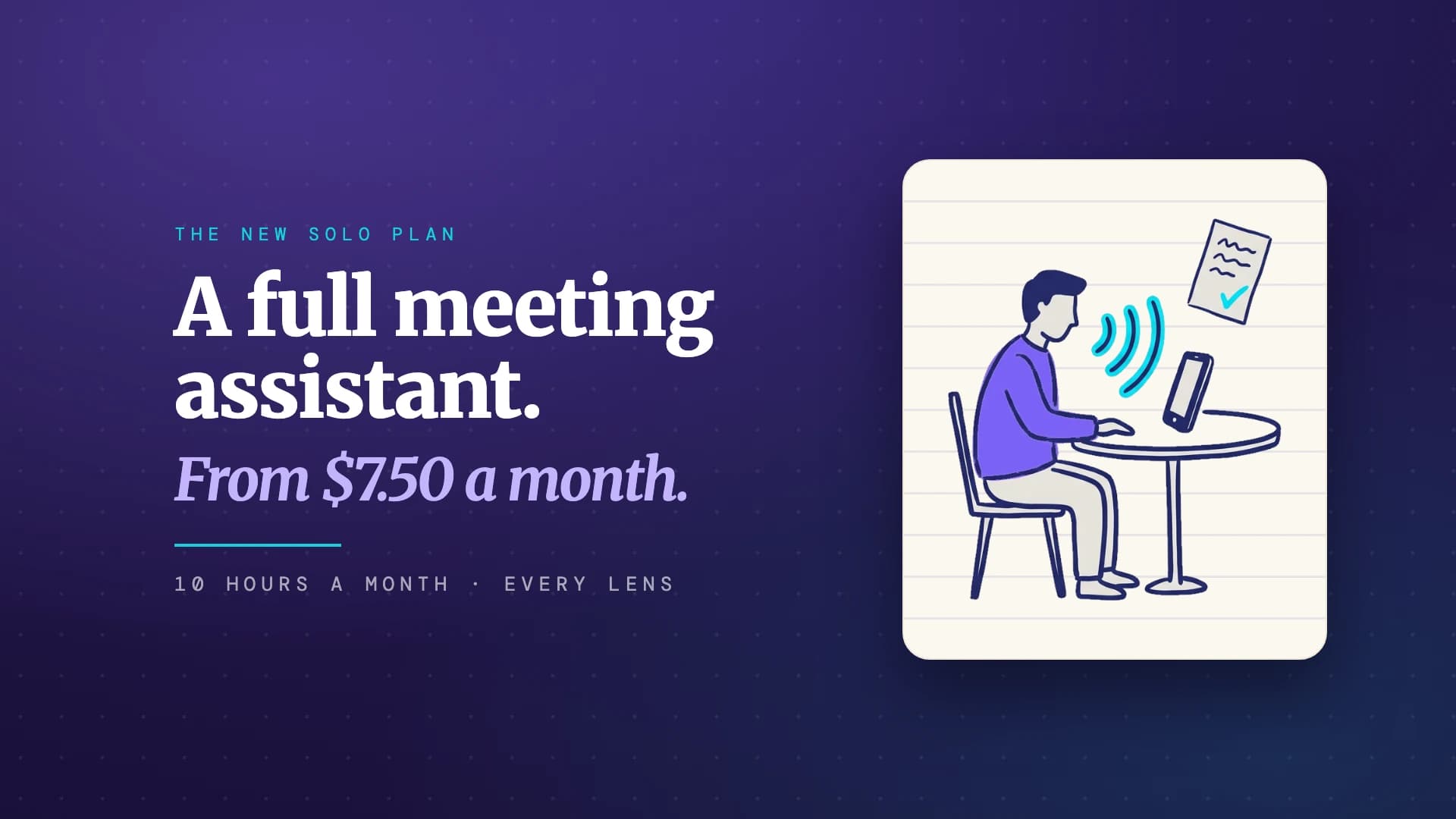
- >Solo (from $7.50 a month, billed yearly) and Pro include unlimited questions on every conversation.
- >Pro adds Memory-wide questions across whole folders of conversations.
Record your next meeting, open it, and ask the question you would otherwise ask a colleague who took notes. Neuri answers, and shows you where in the meeting the answer lives.